
One day, your baby’s all gummy smiles. Next, you spot a tiny white bump poking through. Their first tooth grows fast. And if you’re like most parents, you probably have a lot of questions. When do teeth actually show up? When should you start brushing? When’s the first dentist visit?
Let’s walk through the timeline together. At Reedy Creek Family & Cosmetic Dentistry, we love helping families navigate every stage of those growing smiles. As your Cary, NC, family dentist, we offer family dentistry services so you and your child can get the dental care you need. Dr. Emily Reece is happy to teach you how to care for your baby’s first tooth as they grow.
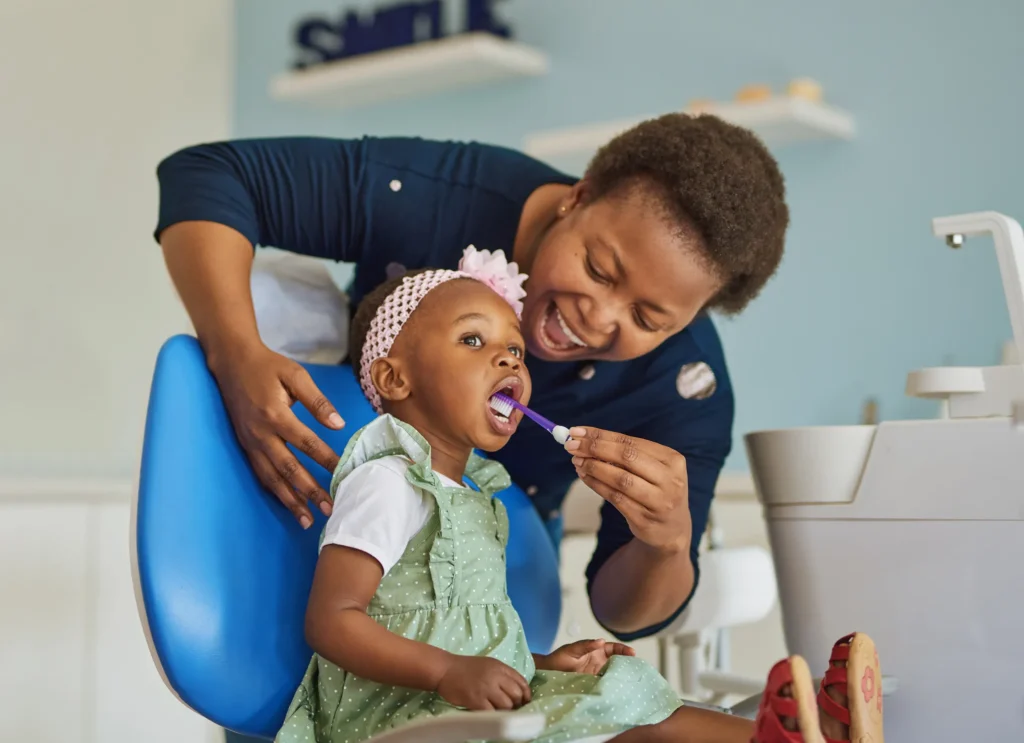
How to Care for Your Baby’s Teeth in Cary, NC: A Timeline
As your child’s teeth grow, you want to know how to care for their teeth and gums as they grow, too. Here’s a timeline of how to care for your child’s smile at every age.
The Gummy Stage: 0 to 6 Months
Before those first teeth arrive, you still have a job to do. Wipe your baby’s gums with a soft, damp cloth once a day. This gets rid of bacteria and gets your little one used to having something in their mouth. It also helps with those tender, swollen gums that make babies fussy.
A clean finger or a chilled teething ring can work wonders on a rough afternoon. The coolness soothes sore gums and provides comfort. Just make sure teething rings are free of harmful chemicals like BPA.
The First Tooth Arrives: 4 to 7 Months
Those two bottom front teeth are usually the first to show up. You might notice extra drool, fussiness, or a sudden urge to chew on everything. That is totally normal.
Once that first tooth pops through, it is time to start brushing. Use a tiny, soft bristled infant toothbrush and just a smear of fluoride toothpaste. The amount should be about the size of a grain of rice. Brush gently twice a day.
At this stage, you are still doing most of the work. But your baby is getting used to the feeling of having their teeth cleaned. This builds a habit that will last a lifetime.
The First Birthday, First Visit
The American Dental Association recommends that a child see the dentist by their first birthday or within six months of that first tooth appearing. That sounds early, but there is a good reason for it.
Dr. Reece keeps these visits simple and friendly. She will check that teeth are coming in correctly and look for any early signs of problems. Then she will answer your questions about teething, thumb sucking, or bottle use.
It is also a chance for your baby to get comfortable in our office before they ever need a filling or cleaning. The goal is to make the first visit positive and stress free.
The Toddler Years: 1 to 3 Years Old
By age three, most kids have all 20 of their baby teeth. Those teeth are smaller and whiter than adult teeth. They also have thinner enamel. That means cavities can happen faster than you might expect.
Brushing twice a day is not optional. Use a pea sized amount of fluoride toothpaste once your child is old enough to spit, usually around age two or three.
Let your child hold the brush and try on their own, but follow up to make sure the teeth are actually clean. Kids do not have the dexterity to do a thorough job until age seven or eight.
This is also the age when pacifiers and thumb sucking become a concern. Most kids stop on their own. But if they keep going past age three, it can start to affect how their teeth line up. Dr. Reece can give you kind, practical tips for helping them quit.
The Preschool Years: 3 to 5 Years Old
By kindergarten, your child’s mouth is getting ready for big changes. Their baby teeth are holding space for adult teeth that will arrive in a few years. That is why keeping baby teeth healthy matters, even though they will eventually fall out.
A cavity in a baby tooth can cause pain, infection, and problems with the permanent tooth underneath. Baby teeth are not just placeholders. They guide the adult teeth into the right position. Losing a baby tooth too early can cause crowding or alignment issues later.
This is also the perfect age for dental sealants once those back molars come in. Sealants are thin, protective coatings that fill in the deep grooves where food gets stuck. They are painless, fast, and incredibly effective at preventing cavities.
Common Questions About Baby Teeth
Many parents ask these questions about their child’s dental health.
When should I start flossing?
Once two teeth touch, you can start flossing between them. This usually happens around age two or three.
What if my child refuses to brush?
Try letting them pick out their own toothbrush. Character toothbrushes are a parenting hack. Brush your teeth together so they can copy you. Use a fun timer app or sing a two minute song. Do not turn it into a battle. Just keep at it.
Are baby teeth really that important?
Yes. They hold space for adult teeth and help your child chew and speak clearly. The baby teeth also act as placeholders for adult teeth.
Schedule Your Child’s First Visit Today
Watching your baby grow into a confident kindergartner with a full, healthy smile is one of the best parts of parenting. You do not have to figure it all out alone. Dr. Reece and our team are here to help at every stage.
Is it time for your child’s first visit? Give us a call at 919-646-6294 or request an appointment online. We can’t wait to meet your family.